

featured
2026-11-24
Home
published
Mortgage Scam Letters: How to Spot Fake Mortgage Mail After Buying a Home

2017-04-24
- New homeowners often receive mortgage-related mail after closing.
- Not every mortgage-related letter comes from your lender.
- Scammers frequently use urgent language to pressure homeowners.
- Mortgage protection insurance and home warranty offers are often optional.
- Never share personal or financial information without verifying the sender.
- Always confirm payment instructions directly with your mortgage lender.
- If you're unsure about a letter, contact Texas Bay before taking action.
Buying a home is an exciting milestone, but it often comes with new fraud risk.
As you get settled in, you'll likely start receiving mail related to your mortgage and homeownership. Some of these letters may look like they came from your mortgage lender. While many are legitimate, others are designed to mislead homeowners into sharing personal information, sending money, or taking actions that could put their finances at risk.
Understanding how to identify mortgage scam letters can help you protect yourself and enjoy your new home with confidence.
Why Am I Receiving So Much Mail About My Mortgage?
Many homeowners are surprised by the amount of mail they receive after purchasing a home. Because certain property and mortgage information becomes publicly available, companies may use that information to market products and services to new homeowners.
While some mail pieces are legitimate advertising, others may be misleading or intentionally designed to look official. That's why it's important to carefully review any mortgage-related correspondence before responding.
Common Types of Mortgage Scam Letters
Scammers often target new homeowners because they know you're navigating a lot of new information. Be especially cautious if you receive letters related to the following topics.
1. Urgent Requests About Your Mortgage
Some letters claim there's an issue with your mortgage and demand immediate action. These notices may encourage you to call a phone number or visit a website that is not affiliated with your lender.
2. Mortgage Protection or Mortgage Life Insurance
You may receive mail implying that mortgage protection insurance is required to maintain your loan. While some homeowners may choose these products, they are often optional despite official-looking language.
3. Home Warranty or Extended Warranty Notices
These letters typically suggest that your coverage is about to expire or requires immediate renewal. Before responding, verify whether you have an existing warranty and whether the offer is legitimate.
4. Offers to Lower Your Interest Rate or Monthly Payment
Be wary of companies requesting upfront fees in exchange for loan modifications, interest rate reductions, or payment assistance.
5. Property Deed and Public Record Services
Some mailings offer to obtain copies of your deed or property records for a fee. In many cases, these documents can be obtained directly from local government offices.
6. Mortgage Transfer Notices
If a letter claims your mortgage has been transferred to a new servicer and provides new payment instructions, verify the information independently before making any payments or updating account information.
Signs a Letter About Your Mortgage May Be a Scam
While scam letters come in many forms, they often have similar warning signs.
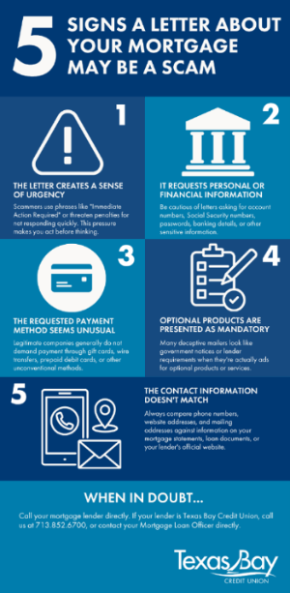
1. The Letter Creates a Sense of Urgency
Scammers frequently use phrases such as "Immediate Action Required" or threaten penalties if you don't respond quickly. This pressure is designed to make you act before verifying the information.
2. It Requests Personal or Financial Information
Be cautious of letters asking for account numbers, Social Security numbers, passwords, banking details, or other sensitive information.
3. The Payment Method Seems Unusual
Legitimate companies generally do not demand payment through gift cards, wire transfers, prepaid debit cards, or other unconventional methods.
4. Optional Products Are Presented as Mandatory
Many deceptive mailers are designed to look like government notices or lender requirements when they're actually advertisements for optional products or services.
5. The Contact Information Doesn't Match
Always compare phone numbers, website addresses, and mailing addresses against information on your mortgage statements, loan documents, or your lender's official website.
What Should I Do if I Receive a Suspicious Mortgage Letter?
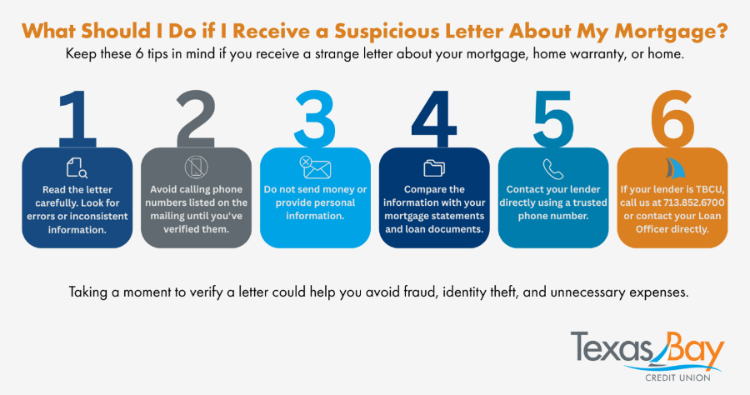
If something doesn't look right, don't panic.
- Read the letter carefully.
- Avoid calling phone numbers listed on the mailing until you've verified them.
- Do not send money or provide personal information.
- Compare the information with your mortgage statements and loan documents.
- Contact your lender directly using a trusted phone number.
- If your lender is Texas Bay, call us at 713.364.1197 or contact your Mortgage Loan Officer directly.
Taking a moment to verify a letter could help you avoid fraud, identity theft, and unnecessary expenses.
Frequently Asked Questions: Mortgage Scam Letters
Is it normal to receive a lot of mortgage-related mail after buying a home?
Yes. New homeowners often receive a significant increase in mail after closing because certain property and mortgage information becomes publicly available.
How can I tell whether a mortgage letter is legitimate?
Verify the company using contact information from your loan documents, mortgage statements, or the lender's official website. Avoid relying solely on the contact information included in the letter.
Do I have to purchase mortgage protection insurance?
Not necessarily. Many mortgage protection and mortgage life insurance offers are optional, even when they appear urgent or official.
Can scammers make letters look like they're from my lender?
Yes. Some scam letters use logos, formatting, and language that resemble communications from legitimate financial institutions.
Should I ever send personal information in response to a mortgage letter?
Only after independently verifying that the request is legitimate. Never provide sensitive information simply because a mailed letter asks for it.
What should I do if a letter says my mortgage has been transferred?
Contact your current mortgage servicer using a trusted phone number before making any payment changes or following new instructions.
Are offers to obtain copies of my deed legitimate?
Some companies offer this service for a fee, but property records are often available through local government offices, frequently at a lower cost.
Who should I contact if I'm unsure about a mortgage-related letter?
Contact Texas Bay at 713-852-6700 or speak with your mortgage loan officer. It's always better to verify first than risk becoming the victim of a scam.
When in Doubt, Contact Texas Bay
Receiving unfamiliar mortgage-related mail can be confusing, especially when you're focused on settling into your new home.
If you receive a letter and aren't sure whether it's legitimate, contact Texas Bay directly at 713-852-6700 or reach out to your Mortgage Loan Officer before taking any action.
We'll help you separate legitimate communications from potential scams so you can protect your information and focus on enjoying your new home.